
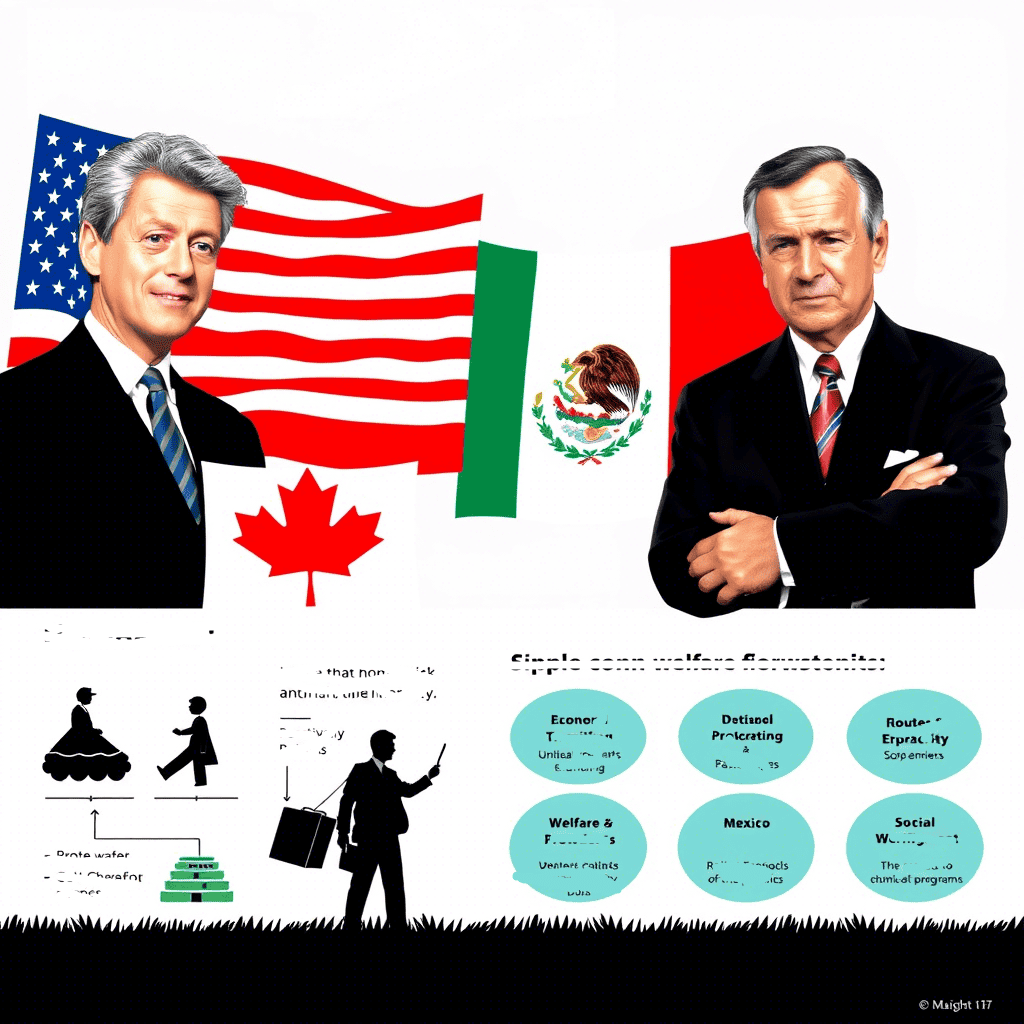
The 1990s were a transformative decade for legislation, shaping the modern economic, social, and political landscapes of the United States. From the signing of NAFTA, which created a trilateral trade bloc, to the groundbreaking Telecommunications Act of 1996, which paved the way for the digital age, the laws passed during this era had lasting impacts. Key reforms, like the Personal Responsibility and Work Opportunity Reconciliation Act, redefined welfare policies, while environmental and global agreements, such as the Kyoto Protocol, underscored the growing importance of international collaboration.
This quiz dives into the defining pieces of legislation that left an indelible mark on the 1990s. Explore the milestones of crime prevention with the Violent Crime Control and Law Enforcement Act, the fight for equality with “Don’t Ask, Don’t Tell,” and advancements in healthcare with programs like SCHIP. Whether you’re a history buff or just curious about the transformative policies of the 90s, this quiz will test your knowledge of the laws that continue to shape the world today.
#1. What does NAFTA stand for?
#2. Which U.S. president signed NAFTA into law in 1993?
#3. What was the primary goal of the Personal Responsibility and Work Opportunity Reconciliation Act of 1996?
#4. Which act deregulated the telecommunications industry in 1996?
#5. What legislation led to the creation of the World Trade Organization (WTO) in 1995?
#6. What policy, introduced in 1993, aimed to allow LGBTQ individuals to serve in the military under certain conditions?
#7. Which act, passed in 1994, sought to address violent crime and gun control in the U.S.?
#8. What act, signed in 1993, required states to offer voter registration when issuing driver’s licenses?
#9. What 1996 legislation aimed to address the growth of online communications and promote competition in the communications industry?
#10. Which act, passed in 1997, created a new health insurance program for low-income children?
#11. Which law, passed in 1994, established mandatory background checks for firearm purchases?
#12. What 1997 agreement committed nations to reducing greenhouse gas emissions?
#13. Which bill, signed into law in 1996, strengthened federal law enforcement and expanded counter-terrorism measures?
#14. Which 1996 act provided grants to states to expand access to healthcare for underserved populations?
#15. Which law, passed in 1994, focused on addressing domestic violence and violence against women?
Results



RELATED QUIZZES
1990s World History Trivia: The Decade That Shaped Our World
1990s Trailblazing Women: Inspiring Firsts in Politics and Leadership
The Clinton Years: Politics and Policies of the 1990s Quiz
Republican Revolution of 1994: Quiz on Key Events and Impact
Answer Explanations:
1. What does NAFTA stand for?
Answer: North American Free Trade Agreement
Explanation: NAFTA created a trilateral trade bloc between the U.S., Canada, and Mexico, eliminating trade barriers and fostering economic integration among the three nations. It went into effect in 1994.
2. Which U.S. president signed NAFTA into law in 1993?
Answer: Bill Clinton
Explanation: Although negotiations for NAFTA began under George H.W. Bush, Bill Clinton signed the agreement into law after securing additional environmental and labor provisions.
3. What was the primary goal of the Personal Responsibility and Work Opportunity Reconciliation Act of 1996?
Answer: To reform the welfare system and promote work
Explanation: This act overhauled welfare by introducing work requirements and time-limited benefits, aiming to reduce long-term dependency on government aid.
4. Which act deregulated the telecommunications industry in 1996?
Answer: Telecommunications Act of 1996
Explanation: This act aimed to foster competition in the telecommunications industry, leading to advancements in cable, internet, and wireless communications.
5. What legislation led to the creation of the World Trade Organization (WTO) in 1995?
Answer: General Agreement on Tariffs and Trade (GATT)
Explanation: GATT, established in 1947, was succeeded by the WTO in 1995, formalizing global trade rules and dispute resolution mechanisms.
6. What policy, introduced in 1993, aimed to allow LGBTQ individuals to serve in the military under certain conditions?
Answer: Don’t Ask, Don’t Tell
Explanation: This policy allowed LGBTQ individuals to serve in the military as long as they did not openly disclose their sexual orientation, aiming to balance inclusivity and unit cohesion.
7. Which act, passed in 1994, sought to address violent crime and gun control in the U.S.?
Answer: Violent Crime Control and Law Enforcement Act
Explanation: This act funded law enforcement, implemented a federal assault weapons ban, and included measures such as the “three-strikes” sentencing laws.
8. What act, signed in 1993, required states to offer voter registration when issuing driver’s licenses?
Answer: National Voter Registration Act
Explanation: Commonly called the “Motor Voter Act,” this law aimed to make voter registration more accessible and increase voter turnout.
9. What 1996 legislation aimed to address the growth of online communications and promote competition in the communications industry?
Answer: Telecommunications Act of 1996
Explanation: This act was pivotal in shaping the modern communications landscape, promoting deregulation, and enabling competition in emerging technologies.
10. Which act, passed in 1997, created a new health insurance program for low-income children?
Answer: State Children’s Health Insurance Program (SCHIP)
Explanation: SCHIP provided federal funds to states to expand health insurance coverage for children in families that did not qualify for Medicaid but could not afford private insurance.
11. Which law, passed in 1994, established mandatory background checks for firearm purchases?
Answer: Brady Handgun Violence Prevention Act
Explanation: Named after James Brady, this law required background checks for individuals purchasing firearms from licensed dealers to prevent gun violence.
12. What 1997 agreement committed nations to reducing greenhouse gas emissions?
Answer: Kyoto Protocol
Explanation: The Kyoto Protocol was an international treaty aimed at combating climate change by reducing greenhouse gas emissions. While the U.S. signed the treaty, it was never ratified by the Senate.
13. Which bill, signed into law in 1996, strengthened federal law enforcement and expanded counter-terrorism measures?
Answer: Antiterrorism and Effective Death Penalty Act
Explanation: This act sought to combat terrorism by increasing penalties for terrorist activities and limiting appeals in death penalty cases.
14. Which 1996 act provided grants to states to expand access to healthcare for underserved populations?
Answer: Health Insurance Portability and Accountability Act (HIPAA)
Explanation: HIPAA expanded healthcare access and introduced protections for personal health information, making healthcare more accessible and secure.
15. Which law, passed in 1994, focused on addressing domestic violence and violence against women?
Answer: Violence Against Women Act (VAWA)
Explanation: VAWA provided federal resources for addressing domestic violence, sexual assault, and stalking, marking a significant step in protecting women’s rights and safety.
